Nicholas Triolo 谈跑步、写作与绕行:从 Dean Karnazes 到 Western States 100
Nicholas Triolo and the Art of Running
iRunFar 专访越野跑者兼作家 Nicholas Triolo。他讲述了自己如何从网球家庭和背包客背景,在 Joe Grant 和 Yassine Diboun 的引导下进入超马世界,并于 2012 年完成 Western States 100。
一位从零跑到百英里的写作者,坦诚分享创作与奔跑如何交织成一种观察世界的方式。
The post Nicholas Triolo and the Art of Running appeared first on iRunFar.
Meet Nicholas Triolo, a trail runner and writer whose work you have likely heard of. He has been an editor for Outside Run and Trail Runner, Orion, and currently Magic Canoe. Nick is a deep thinker and just last year wrote a book, “The Way Around: A Field Guide to Going Nowhere.”
Running, as much as writing, is a part of his daily practice and less about seeking an end result and more about a way to see and experience the world. If you’re into the philosophical underpinnings of movement and looking at them from a different angle, you will likely enjoy Nick’s perspective. It’s one that I hope the running world will pay attention to. I met Nick several years ago, the only time I’ve ever been to the U.S. East Coast, and I continue to enjoy following his wanderings and words. Without further ado, here is Nicholas Triolo:
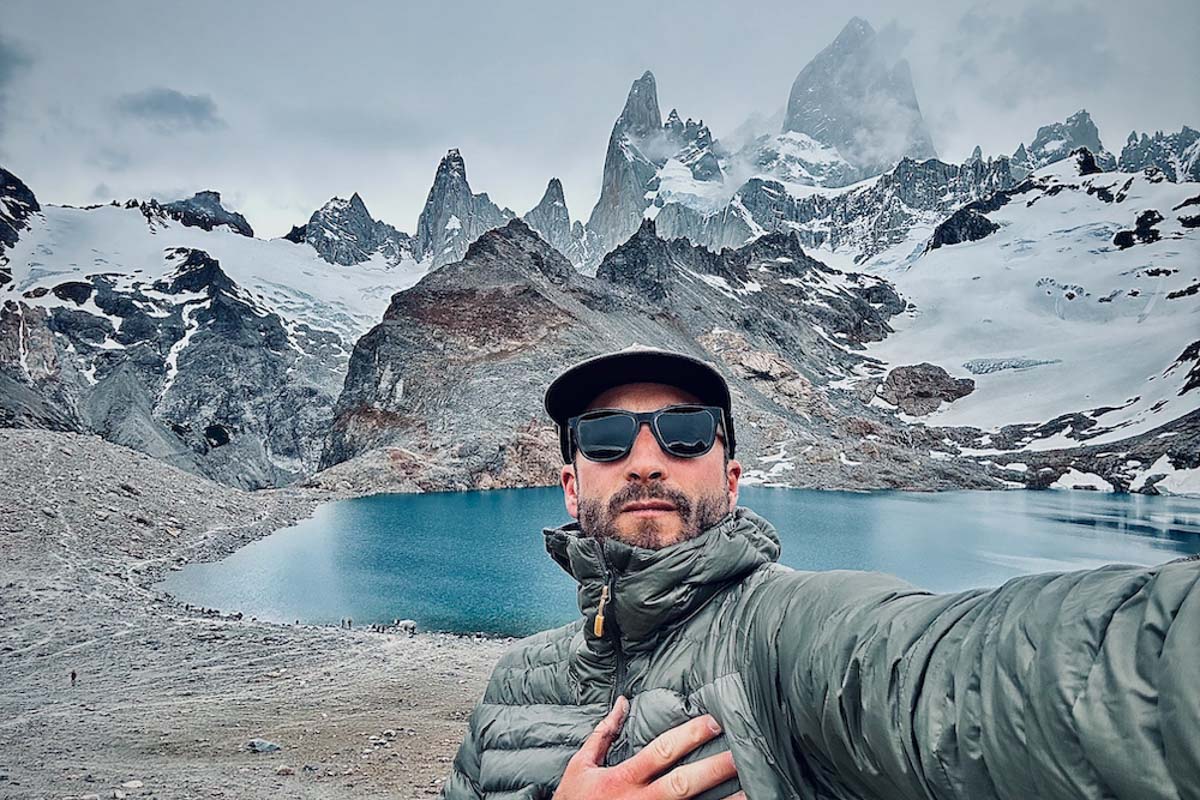
When and how did you start writing and running?
I’m a writer, runner, educator, and editor currently living in Missoula, Montana. I was born and raised in the San Francisco Bay Area and the western slope of the Sierra Nevada foothills.
Writing came to me because of sound, really. I loved the rapping propulsion of my grandfather’s typewriter when we’d go visit him. I’d disappear at their house, hijack his office, and type up outrageous stories to read at family dinner. It would evolve into some travel writing and a blog (remember those?) that I maintained for quite some time. More than that, though, I think my love for writing came from a love for reading. (Any writer worth their weight in salt reads voraciously.) I started with whatever brought me alive, which, of course, were Goosebumps. In high school, I would be thoroughly rocked by “Crime and Punishment,” which would mark a huge sea change for me and my understanding of what writing could do to plumb the innermost psyche.
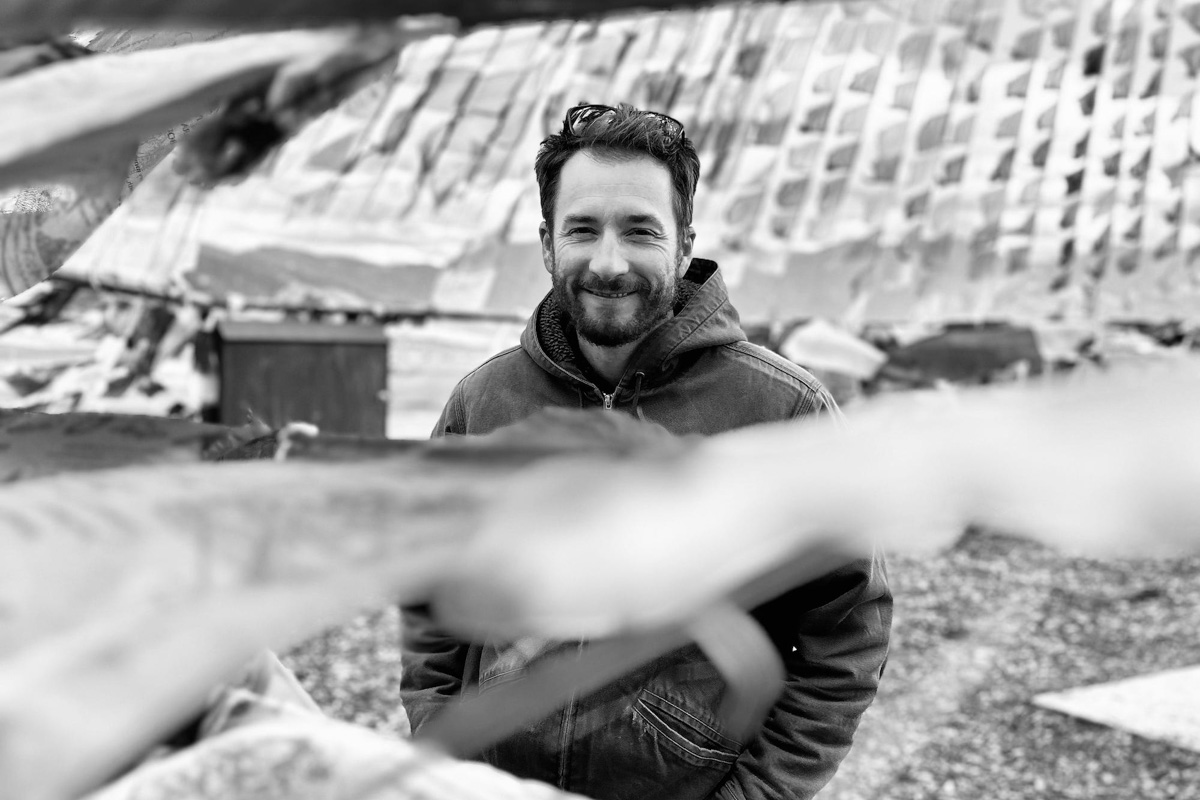
Running never made sense to me as an activity unto itself. At first, anyway. I grew up in a family of tennis players (my mother competed at Wimbledon, U.S. Open, French Open, etc., so my older brother and I grew up playing tennis, baseball, soccer, etc.). Running was always to sharpen the saw for something else. I remember a family friend was an ultrarunner and had run the American River 50 Mile, and had been involved in this entirely psychotic thing called the Western States 100, and between those seeds and coming across, wait for it, Dean Karnazes having pizza delivered to him while running, long-distance running was placed on my map. Also, I grew up backpacking a fair amount, and my knuckleheaded adolescence always looked for ways to go faster, go lighter, jump higher. Running in the mountains for hours or days with little else but a water bottle and sugar was a natural fit.
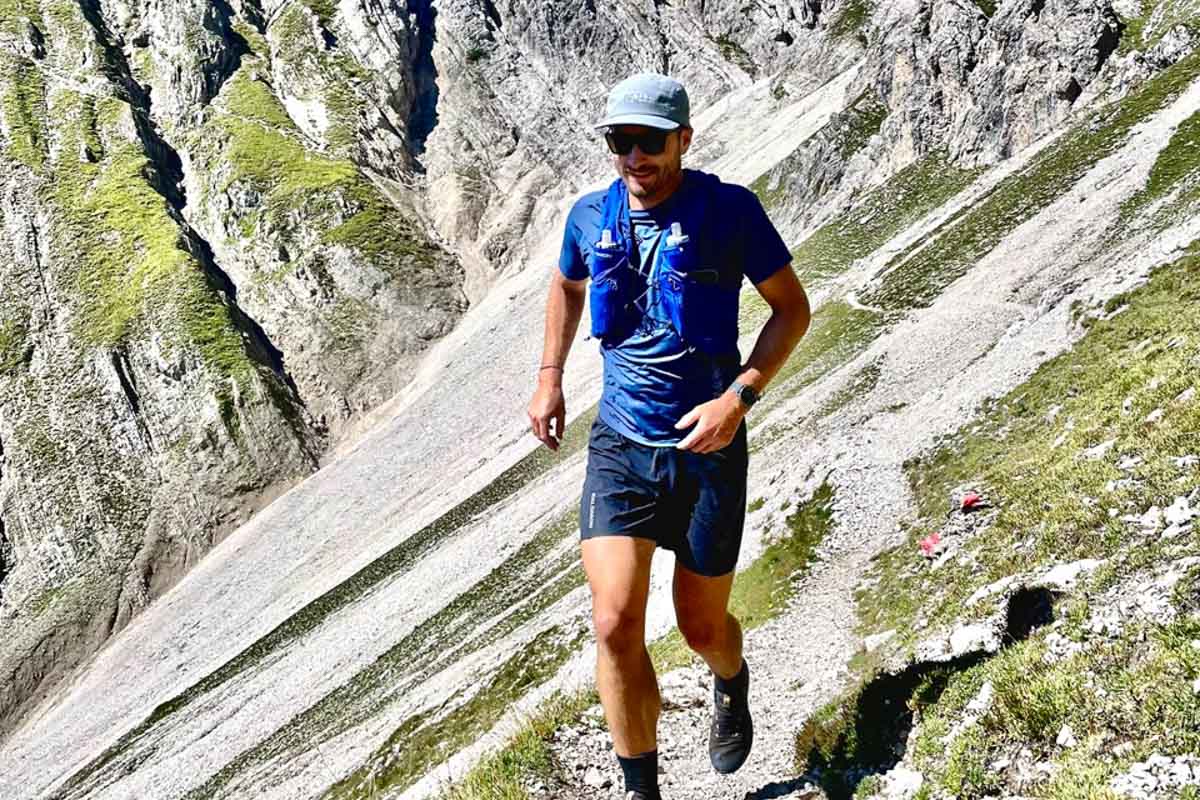
But the real kicker for getting into running, however, was moving to Portland, Oregon, in 2007 and befriending Joe Grant, and later, Yassine Diboun. These two incredible humans and athletes express-routed me into the world of 50ks, 50 milers, 100ks, and eventually 100 milers. (Including running that “psychotic” race, the Western States 100.) But most importantly, their friendship got me a direct relationship with the living world, the wilderness areas, for extended periods of time, which I still thank them for regularly.
How are trail running, writing, and circumambulation linked for you?
Creativity and movement have always been interwoven for me. Go out, come back. Pay attention. Share what you find. I’ve been writing my whole life, but publicly for an audience for about 20 years now. In my early twenties, I always dreamt of being a Lonely Planet writer or something, heading deep into distant locales and writing about them and having someone pay me for it. But then, when I got into running long distances, the whole experience and community were so new and raw, so wild and bizarre, that I started to really try and capture what was coming up for me. So in a way, I kept up feeding some curiosity for travel — and still do a lot of it! — but it became more about foot travel and interior travel, more than requiring some conceit of going outward, to other continents. The novelty and awe and surprise lived right here. Metatarsals as passports.
Are there any writers/movers who have inspired you?
Oh god, so many. Everyone’s sick of how much I love Robert Macfarlane. I had the chance to run trails and climb Mount Hood with him this spring, which was a dream. He’s a stout runner! Haruki Murakami, Ben Gibbard, Helen Whybrow, Brendan Leonard, Hanif Abdurraqib, Daegan Miller, Rickey Gates. Joe Grant. Forest Woodward. Leath Tonino. I’m missing a ton of writer-mover folks in my life, but I do have this dream of curating a literary running anthology. (Any publishers out there? Let’s talk.)
Has anywhere you’ve traveled had an impact on how you see the world?
Cop-out alert, but I’d argue that everywhere I’ve lived and traveled has shaped the lens by which I see the world; from running several hours around downtown urban Los Angeles to recently returning from a huge mountain running trip in Ladakh, I come back from all these experiences changed and stirred in some way.
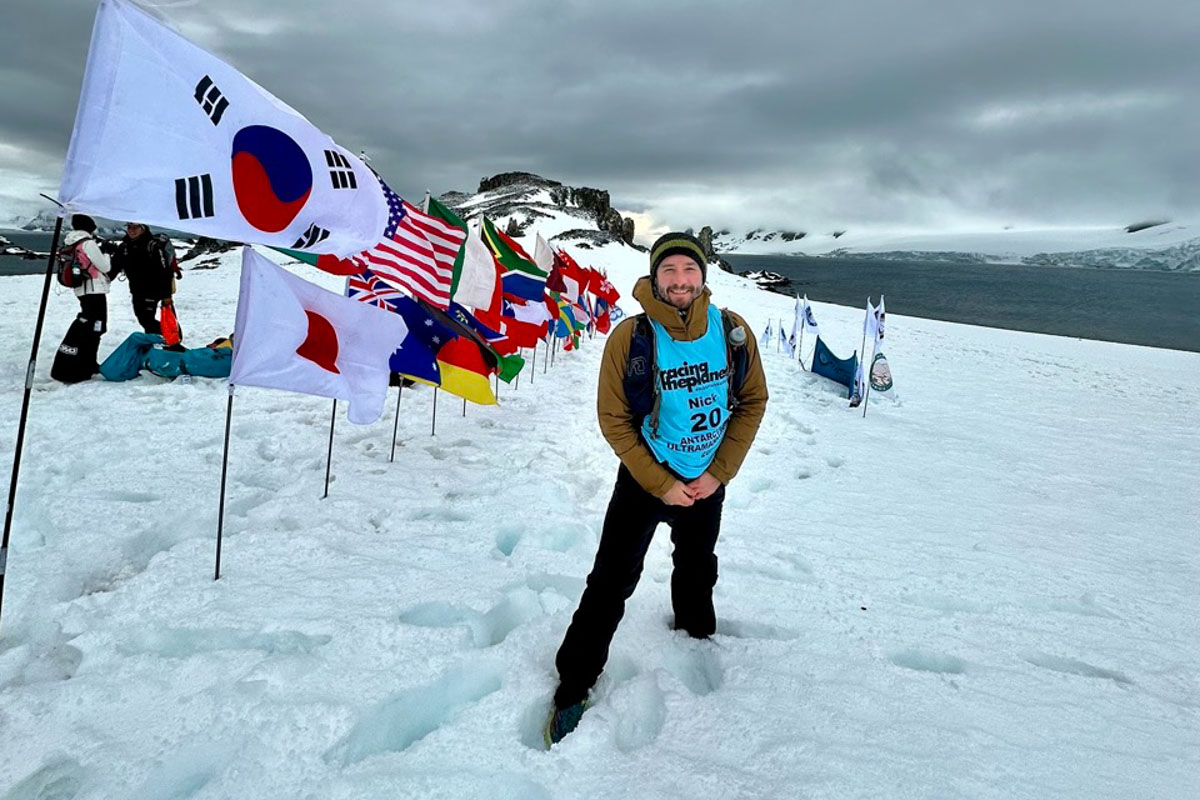
Landscapes that have really stuck with me, though, were joining on a stage-race trip to Antarctica a few years ago, running the 80-plus miles around Peru’s Cordillera Huayhuash, joining Rickey Gates for a hut-to-hut trip in Colorado, running a 50k in the mountain jungles of Chiang Mai, and guiding the 93-mile Wonderland Trail for several years. I also spent a few years living in New England, working for Orion Magazine, and getting up into the White Mountains. The Pemi Loop is one of my favorite long days ever (or two days, as my partner and I did for my birthday last year, overnighting in a hut). I actually have a strange homesickness for that part of the world, those trails, that air. Growing up in the Sierra Nevada foothills and living in Montana now, I know and love big landscapes well, but the more subtle magic of the New England backcountry really makes my skin tingle.
What does your relationship to running look like these days?
My relationship is interesting. Generally, I have very little interest in racing or competing anymore — my last race was an attempt to run a 50k fueled only on one apple fritter wedged in my shorts. It didn’t end well.
I still move every day, 30 to 50 miles per week with three strength workouts, but it really feels like a “practice” these days, something hygienic, something that doesn’t quite have hard and fast goals attached to them, in the immediate, anyway. Maybe the goals are just working on a different timeline now. I want to be active and clear-headed and clear-hearted and pliable my whole life, curious and open to seasonal changes — charting when mountain blue birds return, how the northern harriers are drifting on the fence post run in the North Hills — stuff like that. I said to someone recently that I’ll probably try for another 100-mile race in the next several years, but I don’t know when, or where, or how. It’s taken me a long time to say this with any sense of confidence, but I’m actually in a very solid relationship with my body and my home wilds right now, and I don’t want to really fuck that up, you know?
What does your creative process generally look like?
I do adhere to a fairly blue-collar approach to writing. I’m not a naturally gifted writer, didn’t grow up in an overly academic household, but, as mentioned, did read voraciously early on. When I’m home, I typically wake up early, like 5 a.m. or 6 a.m., make an unreasonable amount of coffee, try to meditate or just be quiet for a few minutes, sketch a plan for the day, then hit my timer for three hours, place my phone far from my writing desk, and I start to write. It could be whatever: a book project, letters, a Substack newsletter, essays, handwritten (bad) poetry. It matters less what it is, but rather that I start my day focused on making art, pursuing truth and beauty. The night before, I’ll actually write down a list of the top three things I need to be writing, and so when I get to the desk in my strung-out haze, I know where to direct my attention on the page. By 10 a.m. I’m tweaky-famished and hunt for a scone or something, and then go run in the hills. The rest of the day is bonus.
What are you reading these days?
I just finished “Beginning Middle End,” a wonderful novel by Valeria Luiselli. Must-read. I also just cracked “Martyr!” by Kaveh Akbar, and, for nonfiction, “Timefulness” by Marcia Bjornerud. I also just started “Erratica,” a climbing memoir by Brian Laidlaw; we’ll be paired up for a few book events this fall to celebrate his book and my paperback release, both with Milkweed Editions. I’m always excited about several books at once: novels, nonfiction, magazine articles, poetry.

If you could go for a walk with anyone in the world right now, who would it be?
Rebecca Solnit.
Any places you’re hoping to run or circumambulate someday?
My mother just died this spring, and her fondest memories were traveling through South Africa to play professional tennis, but really, her love was for wild places and big animals and big unmodified landscapes. So I dream of getting down there, meeting my South African friends for runs on their home turf, and taking a pinch of my mother’s ashes with me.
Do you have any advice for writers trying to get their work out there?
Work on being a person, first. (I think that’s stolen from advice Barbara Kingsolver gave when asked a similar question, but fully co-sign.) Read more than you are. Read not just to read but to fall in love with the song and spellcasting of language. Think of it as a courtship. Revision is everything, which is another way of saying that patience is everything. Study, find mentors, surround yourself with writers you admire. Connecting running here, I think that’s how I got so quickly into ultrarunning. I had no business ultrarunning, but after befriending Joe and Yassine and others, I was express-routed into running for 50 to 100 miles at a time, going from never having run 10 miles to finishing the Western States 100 in 2012. That’s not because I have any talent, but because I had such a wonderful and generous community, guidance, and mentorship. Paired with discipline, of course. I have this pink Post-It note on my writing desk that I look at every day, which says: “You do the thing by doing the thing.”
If you could be a tree, what kind of tree would you be?
Monkey puzzle.
Call for Comments
- Do you have a Nicholas Triolo story you could share with us?
- Who are your writer-mover inspirations?
来源:iRunFar 爱路跑 · irunfar.com